
When it comes to elevating the flavor and nutritional profile of your meals, the debate of clarified butter vs butter is one that every health-conscious cook and professional chef eventually encounters. While both products originate from the same source—high-quality dairy cream—the way they are processed creates two fundamentally different ingredients. While butter is a beloved staple for its creamy texture, it contains water and milk solids that limit its versatility. On the other hand, clarified butter or ghee is the result of a purification process that removes these impurities, leaving behind a gold-standard fat that excels in both performance and health benefits.
Understanding the Basics: What Sets Them Apart?
To truly settle the clarified butter vs butter debate, we must look at what happens during the manufacturing process.
Butter is essentially an emulsion of about 80–82% milk fat, 16–18% water, and 1–2% milk solids (lactose and casein). Because it still contains these solids and water, it has a distinct creaminess but is highly perishable and prone to burning.
Clarified Butter (Ghee) is produced by simmering butter at a controlled temperature. During this process, the water evaporates, and the milk solids separate and are eventually strained away. What remains is 99.9% pure milk fat. This transformation isn’t just about texture; it changes the chemical stability and nutritional density of the fat.

The Four Key Differences of Clarified Butter vs Ghee
When comparing butter vs ghee, four main factors determine the winner:
1. The Smoke Point Advantage
The most significant functional difference is the smoke point. Butter has a relatively low smoke point. When you heat butter past this point, the milk solids burn, creating black specks and a bitter taste, while releasing harmful free radicals. In contrast, pure cow ghee has an impressive smoke point. This makes it the safest and most effective choice for high-heat cooking methods like searing, sautéing, and deep-frying.
2. Dairy Sensitivities (Lactose and Casein)
Many people avoid butter due to lactose intolerance or milk protein (casein) sensitivities. Because the clarification process removes nearly all milk solids, pure cow ghee is virtually lactose and casein-free. For those who want the rich, buttery flavor without the digestive discomfort, ghee is the clear winner.
3. Nutritional Concentration
Ghee is a concentrated source of essential nutrients. While butter contains some fat-soluble vitamins, the purification process in ghee concentrates:
- Vitamins A, D, E, and K: Crucial for bone health, immunity, and skin.
- Butyric Acid: A short-chain fatty acid that supports gut health and reduces inflammation.
- CLA (Conjugated Linoleic Acid): Known for its potential in weight management and heart health.
4. Shelf Life and Stability
Butter requires constant refrigeration because the water and milk solids can lead to spoilage and rancidity. Clarified butter is shelf-stable. Due to the absence of moisture, it can be stored at room temperature for months without losing its aromatic, nutty flavor.
Choosing the right fat is about more than just a recipe; it’s about the integrity of your ingredients. If you cannot make ghee at home or are unsure of the quality of the raw materials available to you, it is essential to choose a product backed by tradition and science.
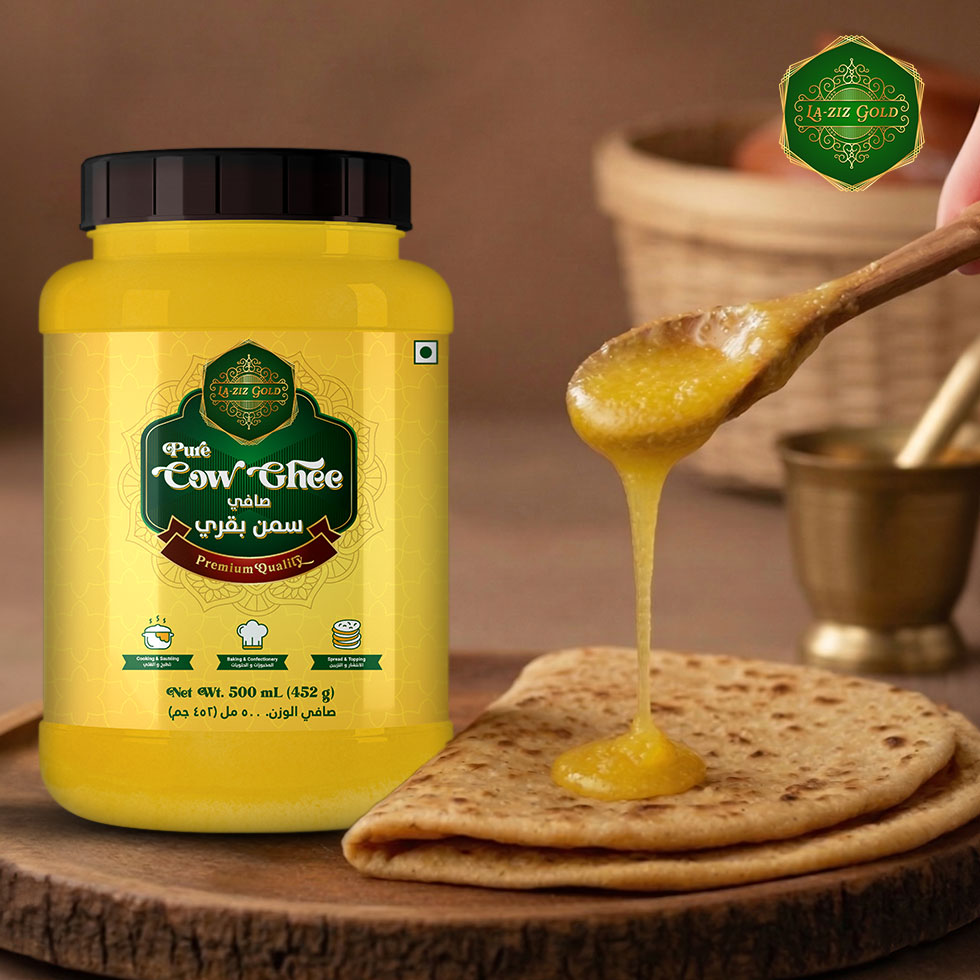
For the best results in your kitchen, rely on a trusted ghee brand like La-ziz Gold. As a premier Indian brand with years of expertise in the dairy sector, La-ziz Gold specializes in making premium cow ghee that preserves the authentic aroma and nutrient density your family deserves. When you choose La-ziz Gold, you aren’t just buying a cooking fat—you are bringing home a legacy of purity.